
Measuring Up…
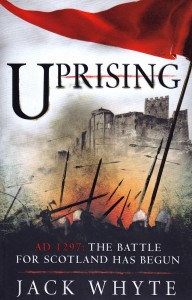
Don’t Let Them Get You Down! UK Version of “Forest Laird.”
You might have noticed, after the past couple of months of isolation, that you can go a bit stir-crazy once you’ve exhausted all your avenues of self-distraction… Your reserves of resilience start dwindling and your capacity for patience starts drying up. I reached that point a few days ago, having managed to keep myself active prior to then by writing madly and putting together a collection of short stories. Once that activity died down, though, and faced with the prospect of increasing boredom and ennui, I went looking for something uplifting that would divert my mind, and the minds of my friends, if for no more than a few smiling moments, from the wintry, humorless cynicism that surrounds us nowadays.
Lots of time ahead, I thought, to contemplate the “post-COVID” future: the resumption of loud, vulgar, uneducated and corrupt morality; fake news, false promises, phony values, festering discontent and foolish, empty rhetoric. For the time being, ignoring “the New Reality”, I felt I needed something to exalt me, to lift me up above the bleakness in the hope I might find something or someone to look up to.
Then I remembered Peter Finch in the movie, “Network”, standing up on national television and shouting to the world that he was fed up and wasn’t going to take it any more, and I perked up immediately, remembering that people, historically, have always managed to come up with ways of uprooting threats, lifting up their spirits, and upgrading their prospects, even when they feel most powerless and ineffectual.
I remembered brightening up at the mental vision of Don Quixote tilting at windmills, and I thought about bearing up under the strain; about not giving up the ship; and about upping the ante by speaking up about my opinions and beliefs…
And then I thought about the word “up” itself, and a memory popped up about something that had cropped up about that a few years ago, and had amused me; something to do with “up” being idiomatically uplifting and astonishing in its range of meanings. So I went digging up old files while the thought of it was still uppermost in my mind, and I came up with what follows here. I wish I could say I wrote it, but I did not. To the best of my knowledge, it was written up anonymously. I’m merely bringing it up now for your enjoyment.
“Up” has more meanings than any other single word in the English language. It is listed in the dictionary as an adverb, a preposition, an adjective, a noun and a verb.
Its meaning is straightforward when it means toward the sky or at the top of the list, but after that, “up” defies classification, other than being described as idiomatic. But you put up with it because you can’t get away from it: when we awaken in the morning, why do we wake up? At a meeting, why does a topic come up? Why do we speak up, and pipe up, and why are qualified candidates said to be up for election? Why does a tie call for a toss up, and a lie, too often, for a cover up? Why is it up to the secretary to write up a report? We call up our friends, brighten up a room, polish up the silver, warm up the leftovers and clean up the kitchen. We lock up the house and fix up the old car. People stir up trouble, line up for tickets, work up an appetite, and think up excuses. And while it is one thing to be dressed, to be dressed up is special.
When it threatens to rain, it’s clouding up; when the sun comes out, it’s clearing up. When it rains, the earth soaks up the water. When it doesn’t rain, things dry up. A drain has to be opened up if it’s blocked up, but why do we open up a store in the morning and close it up at night? We seem to be pretty mixed up about up!
To bone up on the proper uses of up, look up the word “up” in the dictionary. In a desk-sized dictionary, its listed meanings take up almost a quarter of the page and can entail up to about thirty definitions, but if you are up to it, you might try to draw up a list of the many ways up is used. It will take up a lot of your time, but if you don’t give up, you may wind up ending up with upwards of a hundred.
I could go on, but I’ll wrap it up for now because, to sum things up, my number’s up and it’s time to shut up. What’s up with that?
10 Comments
Leave a Comment
You must be logged in to post a comment.
I’ve thought for years that “strike” had the most meanings. I’ll have to look it up before I strike up a conversation about it.
Hello
Please allow me to contact you in regards to a Potential film project.
Alfred Gatt my cell 248 872 5400
Troy Michigan
USA
[email protected]
[email protected]
Dear Jack,
Just moments ago I finished re-reading A Dream of Eagles in its entirety for the third time in my life. This time I decided to end with Uther, having finished the Eagle just prior, and as the story wrapped up, I felt a familiar lump in my throat.
Your books have brought me countless hours of joy, and emotionally moved me more than any other work of art I’ve encountered. I just wanted to share with you how important this series has been in my life. I first read the Skytone entering highschool and as I approach my thirties, I still return to it regularly. With the arrival of Covid and hours of quarantine, I had the opportunity to return to the characters I know so well and I’m so grateful to be able to do so.
It truly feels as though these characters are a part of me, which sounds strange to write, but having spent so much time with them at various stages of my life, it rings true.
I’m not sure where the best place to contact you is, and would send a letter if I could. So hopefully you’ll have an opportunity to read this, and know that your writing has made world of difference in my life.
Thank you, from a grateful fan (and one British Columbian to another)
John
Ps.
I also really enjoyed your memoir. The part about the perception of driving distances differing between Canadians and people living in the UK always amused me
Thank you for sharing this John…
I shared some thoughts as well below.
Sir
I am just curious if you received my emails ?
It’s possible I can get Ron Howard involved.
Your friend Alfred
Well that got me worked up. 🙂
Are we following up a film opportunity?
I’d be up for a film that was more grounded than the recent crop of shyte being flogged at the masses. Skystone seems a fine candidate… I’ve considered tagging Peter Jackson for a proper treatment of this work…
… just ‘typing out loud’…
As I know all his fans and friends will be, but of course, above all his family, I’ve been personally quite saddened and, I admit, a bit dismayed at the passing of the incredible and inspirational Jack Whyte.
For what it’s worth, I would like to share a few thoughts of the impact his works have had on my life, and then some reflections. I first read the A Dream of Eagles series in the summer before my 7th grade, which means I would have been around 12. Long rainy and sometimes stormy afternoons spent lost in 4th and 5th century Britain. Beyond spurring on in me a growing passion for history, and in particular Roman history, the stories also introduced me to many more mature themes and principles which I realize I still deeply hold today, such as integrity of character and how to be and recognize a true friend.
Years later, when I was entering university and was facing a challenging time in my life, I reread the books and they again provided me much comfort and clarity of thought. I admit that in 2007 I drafted a letter to Jack Whyte which I intended to mail to him. This was right after my return from living in Europe for a few years. I’m embarrassed to say that I didn’t immediately find a way to mail it, not knowing where exactly to mail it, and with other urgencies in life, it was eventually lost. It expressed much of what I’m writing here now, but with the exuberance of a young adult just stepping into the world. As my studies progressed, I would later travel to many of the regions in Britain that were associated with the stories, and I always considered A Dream of Eagles as the authoritative version of the age-old story.
Recently I again thought to finally set about thanking this author by writing a letter, and was quite shocked to discover of his passing just a few days prior. It’s a bit painful when perusing this blog, which I have now discovered, and realizing how, over the years, there would likely have been many opportunities to thank him here.
I’m happy that many others did thank him, even in person at the annual SiWC writers’ festival he attended in BC, that he knew the impact of his works, and I’m grateful for the stories and inspiration he’s left us and all the other ways his legacy is here.
Thank you Jack, for everything you’ve given us.
Michael
I’m sure Jack would have appreciated your message. He had a boundless capacity to take in messages from readers and respond.
Thanks for taking the time to post your thoughts.
Mark
Webmaster, jackwhyte.com